Thinking about picking up a duplex, triplex, or a small apartment building in New Haven County but not sure where to start? You are not alone. Small multifamily can deliver steady income and long-term equity, but the right plan depends on local rents, taxes, financing, and town-by-town rules. In this guide, you will learn how to size up deals in New Haven County using realistic numbers, proven underwriting steps, and a straightforward due diligence checklist. Let’s dive in.
Why New Haven County works for small multifamily
New Haven County offers a mix of urban neighborhoods, university and hospital demand, and commuter suburbs that support year-round rental needs. County-level data shows average asking rents in the high 1,900s per unit, which aligns with what you see across typical 1 to 3 bedroom apartments in many towns. You can use the county average as a quick reference, then refine it by submarket.
For conservative underwriting, compare your comps to HUD’s Fair Market Rents. Current county FMRs land around the mid 1,500s for 1 bedrooms and the upper 1,800s for 2 bedrooms, depending on ZIP. That baseline helps you avoid overestimating income on standard-quality units. As you get more specific, expect higher rents around downtown New Haven and Yale corridors, and more moderate numbers in towns like Wallingford, Meriden, and West Haven.
- New Haven County average rent reference: RentCafe county overview
- HUD FMR baseline for underwriting: FY2025 New Haven County FMRs
What small multifamily looks like here
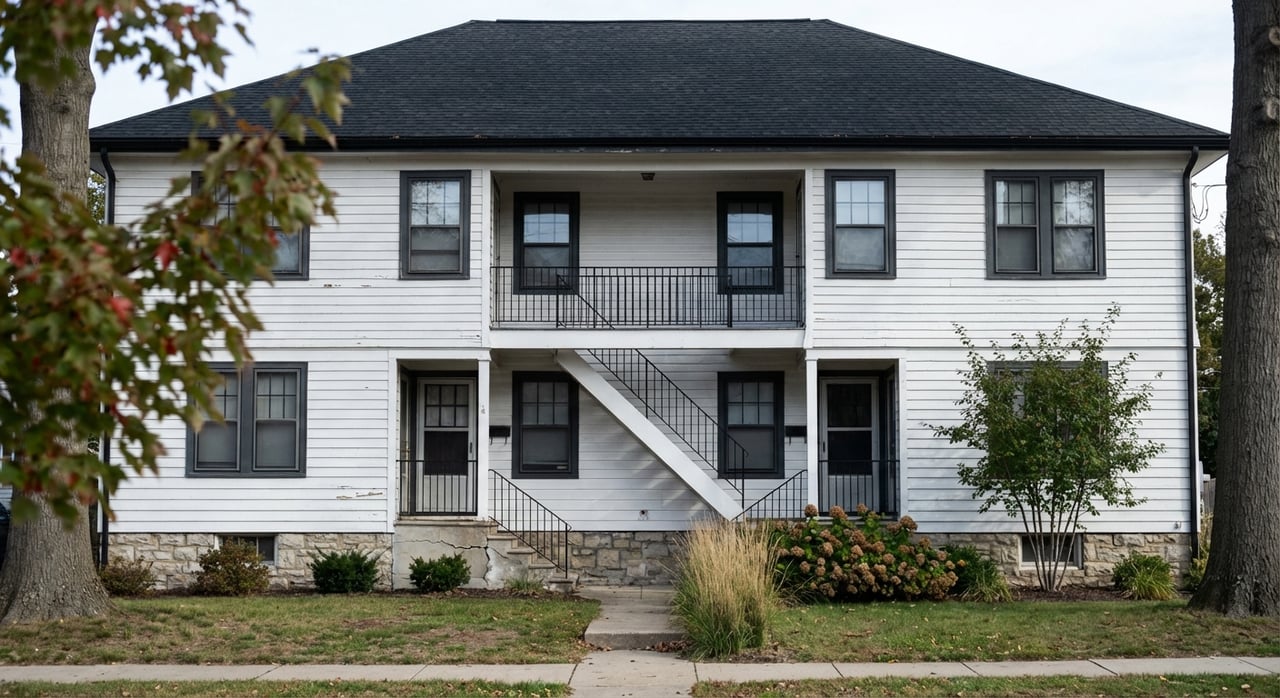
You will see classic New England duplexes and triplexes throughout first-ring suburbs, 4-unit walk-ups and conversions in New Haven and West Haven, and small purpose-built 6 to 20 unit buildings close to transit and employment hubs. Much of the county’s small multifamily stock is older, which often means higher maintenance and code-compliance needs. Budget for age-related items and assume some updating will be needed on value-add plays.
- Local housing stock snapshot: New Haven County demographics and structure types
Underwriting basics that work here
Rent, vacancy, and expenses
Start with conservative rents. Pair local comps with HUD FMR to set a baseline, then adjust for unit quality, parking, and proximity to major employers. Model a vacancy allowance in the 4 to 8 percent range based on property type and submarket. For older buildings, set aside a CapEx reserve of 5 to 10 percent of rent to cover roofs, heating systems, windows, electrical, and common-area upgrades. Always use the seller’s actual utility and expense history when possible.
Valuation metrics investors use
Cap rate and GRM are common for quick screening. Public indicators for the New Haven area show small, older multifamily often trading around the mid to high single digits for cap rates, with many private deals clustering near 6 to 8 percent depending on location, condition, and certainty of income. Smaller or more hands-on assets typically sit at the higher end of that range.
- Regional cap rate context: ApartmentPropertyValuation New Haven area
GRM is helpful for a fast comparison across similar buildings. In this market, low-rise small multifamily often falls in the single digits to low teens, but GRM does not replace a full NOI analysis. Use it to screen, then underwrite deeply with actual expenses, taxes, and capital needs.
Property taxes and local fees
Property taxes are a major driver of operating costs in New Haven County. Mill rates vary widely by town and can shift after revaluations. Always confirm the current assessment and adopted mill rate, and budget for potential increases. On top of taxes, plan for any city-specific licensing or inspection fees that apply to non-owner-occupied rentals.
- Recent local tax context: New Haven Independent coverage of mill rate impacts
- City of New Haven licensing overview: Residential Rental Business License
Financing paths for 2 to 4 units and 5 to 20 units
House-hack and owner-occupied 2 to 4 units
If you plan to live in one unit, FHA’s 203(b) program insures loans on 1 to 4 unit properties and can allow as little as 3.5 percent down with qualifying credit. It is a popular route for a first purchase because you can lock in primary-residence terms and use the other units’ income to offset carrying costs. Check current FHA county loan limits and your lender’s requirements.
- Program outline: FHA 203(b) overview
Conventional loans also support owner-occupied 2 to 4s with specific reserve and underwriting rules. For non-owner investors, down payments and rates are typically higher, and lenders often require stronger reserves and rent evidence.
Investor loans and small apartment underwriting
For 2 to 4 unit investor loans, many lenders target loan-to-value ratios in the 70 to 80 percent range based on borrower strength and property performance. For 5 units and above, loans are usually commercial with DSCR-focused underwriting. Expect shorter fixed terms, commercial amortization, and covenants tied to DSCR and occupancy. Rate sensitivity matters, so run scenarios at higher interest rates and lower rents.
- Commercial and DSCR-focused options: Multifamily loans in Connecticut
CHFA and CDFI tools for the right projects
If your plan includes an affordable component or a small rehabilitation project, the Connecticut Housing Finance Authority and partner CDFIs may offer tailored financing. These programs can lower the cost of capital for 5 to 20 unit properties that meet program criteria, which is useful for naturally occurring affordable housing and neighborhood stabilization.
- Program resource: CHFA Multifamily Mortgage Program
Regulations and management to know
Licensing and inspections
The City of New Haven requires a Residential Rental Business License for non-owner-occupied 2 and 3 family properties, and for 4 or more unit buildings. The program includes inspections, fees, and ongoing compliance, so you should budget for any correction lists and possible re-inspections. Other towns across the county have their own codes and registration rules. Always confirm requirements in the specific municipality where your property sits.
- New Haven details: Residential Rental Business License
Landlord-tenant framework
Connecticut uses a court-driven Summary Process for evictions and requires specific notices and procedures. Timelines vary with the specifics of each case, so careful screening, strong documentation, and clear leases help minimize disruption. Build a buffer into your cash flow plan to cover any extended nonpayment or make-ready periods.
Common building issues in older stock
Because many small multifamily buildings in New Haven County predate 1978, lead paint compliance, electrical and plumbing updates, and fire life safety items are common. In coastal or low-lying areas, check flood maps and price appropriate insurance. Plan specialized inspections where relevant, such as oil tank sweeps, chimney evaluations, and sewer or septic checks.
Due diligence checklist for New Haven County
Use this quick list to keep your underwriting organized:
- Confirm zoning and the number of legal units, plus any accessory or nonconforming uses.
- Request full rent roll, copies of leases, and security-deposit records. Compare in-place rents to conservative comps or HUD FMR baselines.
- Pull the last 12 to 24 months of utility bills, service contracts, and operating expenses.
- Verify current assessed value and the town’s adopted mill rate. Ask about pending revaluations or special assessments.
- Schedule a full building inspection that covers structure, roof, HVAC, electrical, plumbing, windows, and moisture. Add specialized checks for lead paint, asbestos if present, oil tanks, and septic or sewer.
- Check municipal licensing or registration requirements and factor in inspection correction costs.
- Run title, survey, and certificate of occupancy. Confirm no open code cases or unresolved permits.
- Obtain insurance quotes early, including flood if the property is in a FEMA zone.
- Secure lender pre-approval and stress-test cash flow with higher rates and slightly lower rents.
Quick math example on a duplex
Here is a simple framework to size up a stabilized duplex. Assume two 2-bedroom units underwritten to a conservative rent that aligns with HUD FMR-level projections for the submarket. If each unit achieves 1,850 per month, gross income is 44,400 per year. Apply a 5 percent vacancy reserve to net 42,180 in effective income. If operating expenses plus property taxes and insurance total 18,000, and you reserve 5 percent of gross for CapEx, your modeled NOI is roughly 22,980. If the asking price is 325,000, your cap rate is about 7.1 percent. From there, layer in your financing terms to test cash flow and returns.
Getting started with a local plan
Success here comes from conservative underwriting, hands-on due diligence, and a strong local team. If you are just starting, pick two or three target towns, pull current rent comps, and get a lender pre-approval that matches your strategy. Line up inspections, confirm licensing requirements, and budget taxes and reserves with a margin of safety. If you want help building a pipeline or managing from out of area, we offer investor acquisitions, property management, and virtual acquisition support. When you are ready to move, we can source on and off market options, underwrite side by side, and manage to a clean close.
If you want a practical plan tailored to your goals, reach out to Anthony Damore. Let’s set your criteria, build a shortlist, and start touring the right properties.
FAQs
What rents should I expect for a 2-bedroom in New Haven County?
- County averages are in the high 1,900s per unit, while a conservative underwriting baseline for a typical 2-bedroom is often in the upper 1,800s. Adjust for unit quality and submarket.
What cap rate range is common for small multifamily here?
- Many small, older properties trade around 6 to 8 percent depending on location, condition, and income certainty. Newer or more stabilized assets may trade tighter.
Is owner-occupied financing realistic for a duplex or triplex?
- Yes. Owner-occupied programs can allow lower down payments on 2 to 4 unit properties when you live in one unit. It is a common path for first-time investors.
How much should I set aside for capital expenses on older buildings?
- A 5 to 10 percent reserve of gross rent is a practical starting point for roofs, heating systems, windows, and other age-related components.
What local rules can affect cash flow in New Haven city?
- The city requires a Residential Rental Business License for many non-owner-occupied properties. Budget for inspections, fees, and any correction lists.
How do property taxes impact my pro forma across towns?
- Mill rates and assessed values vary by municipality and can shift with revaluations. Always verify current tax data and budget conservatively for changes.